The booth comes back from its fourth show and something about it has changed. Nothing is broken exactly, but the white has gone slightly grey, an edge is chipped where the crate lid caught it, and the headline on the back wall describes a product the company stopped leading with a year ago. Somebody asks whether it is time for a new one, and the honest answer is that nobody in the room actually knows.
That question gets answered badly in both directions. Some companies replace a structurally sound exhibit because it feels tired, spending forty thousand dollars to solve a problem that six thousand would have fixed. Others keep patching a booth years past the point where it represents them well, because each individual repair seemed cheaper than the alternative and nobody ever added them up.
This guide separates the two decisions. It covers what genuinely can be refreshed and roughly what that costs relative to building new, what cannot be changed without a rebuild, and the specific signals that indicate an exhibit has reached the end of its useful life rather than simply needing attention.
Graphics are the obvious answer and the most effective one by a wide margin. New printed panels transform how an exhibit reads, and on most systems they represent a small fraction of the original build cost. A booth carrying dated messaging and faded panels can look genuinely new after a graphics replacement alone, because graphics are what visitors actually perceive as the booth. Structure is the thing they walk through without ever consciously noticing, which is precisely why replacing it rarely changes anyone’s impression.
Surface finishes are the next tier. Laminate can be replaced on flat surfaces, painted elements can be refinished, and worn edges can be repaired and re-edged. This work is straightforward in a shop and impossible on a show floor, which is why it belongs in the quiet months. Refinishing an entire booth typically costs a fraction of rebuilding it and buys several more years of use.
Lighting is the most underrated refresh available. Fixtures have improved considerably, and swapping older lighting for current LED changes the entire character of a space while reducing both the weight and the electrical draw. It is one of the few upgrades that improves appearance and reduces recurring show costs simultaneously, which makes it the easiest recommendation in this entire category.
Between refresh and replacement sits the option most exhibitors do not realize they have. A booth built as a system of components can often be rearranged into a different footprint, extended with new elements that match the existing ones, or reduced for a smaller show without anything being discarded. This is the practical payoff of designing around reusable components in the first place.
Adding to an existing exhibit is usually more economical than replacing it, provided the original was built to accommodate growth. A twenty by twenty that needs to become a thirty by thirty may need only new connecting elements and additional panels rather than an entirely new build, which is the whole argument behind scalable booth design.
The honest limit is matching. Materials age, finishes shift, and a laminate specified four years ago may no longer be manufactured. Extensions can be made to blend convincingly, but a shop should tell you plainly when a match will be approximate rather than exact, and you should decide whether approximate is acceptable before the work starts rather than when the crates open.
Structure is the hard boundary. A frame engineered for one specific configuration cannot be meaningfully re-engineered into a different one, and a booth built for a ten by twenty inline will never become an island by adding parts to it. Anything involving load paths, hanging elements, or elevated construction was calculated for the design as it was built, and changing any of that means new engineering, which in practice means a new build. Fundamental layout is similarly fixed. Where the entrances sit, how visitors move through the space, and where the enclosed areas fall are determined by the structure. If the way people flow through your booth is the problem, no amount of new graphics addresses it, and continuing to refresh the surfaces of a layout that does not work is money spent on the wrong problem.
The third immovable is accumulated repair. Every exhibit has a point where the repairs start to compound, connections loosen from repeated assembly, and install times creep upward because pieces no longer seat cleanly. A booth that requires improvisation to go up is telling you something, and the cost of that is paid in labor hours at every show rather than in a single invoice anyone notices.
Refurbishment has a season, and it is the gap between your last show and your next one. A shop can take a booth apart, refinish surfaces, replace hardware, and reassemble it comfortably in a few weeks when there is no deadline pressing, and the same work becomes expensive and compromised when squeezed into the fortnight before a move-in. Booking refresh work the month the crates come back rather than the month before they ship out is the single easiest way to reduce what it costs.
The work also pairs naturally with the post-show inspection. If the exhibit is already being unpacked and examined for damage, deciding what to refinish while everything is open and accessible saves an entire round of freight, handling, and warehouse labor. Companies that treat inspection and refurbishment as a single scheduled event rather than two separate unplanned ones consistently spend less and end up with better-looking booths, largely because the decisions get made by someone looking at the actual panel rather than remembering it.
Budget cycles are worth aligning as well. Refresh spending is usually small enough to absorb inside an operating budget, while replacement generally requires capital approval and a considerably longer lead time. Knowing a year in advance that a booth has roughly two more shows left in it turns what would have been an emergency purchase into a planned one, and that is usually the difference between building the exhibit you actually want and building whatever can be delivered in six weeks.
Three triggers make replacement the clear answer, and none of them are about appearance. The first is a brand change. A genuine repositioning, a new identity, or a significant shift in what the company sells means the exhibit is now communicating something out of date, and refreshing panels on a structure designed around the old story only goes so far.
The second is a change in show strategy. Moving to substantially larger spaces, shifting into different types of venues, or sharply increasing show frequency all change what the exhibit is being asked to do. A booth designed and engineered for two regional shows a year will not hold up to twelve, and forcing it to try produces exactly the repair spiral described above, only faster and more expensively. The third signal is arithmetic. Add the last two years of repairs, refinishing, replacement parts, and excess install labor. If that total approaches a meaningful share of a new build, and the booth still has the same limitations it started with, the money is being spent to stand still. That calculation is worth running once a year rather than once at the end.
The useful first step is not a quote. It is an inspection by someone willing to tell you the booth is fine when it is fine. A shop that builds and repairs exhibits can look at a structure and say with reasonable confidence how many shows remain in it, which is a considerably better basis for a decision than a feeling that things look tired.
Bring the exhibit you already own to the Steadfast Displays shop before you budget for a new one. Steadfast Displays refurbishes and extends booths as often as we build them from scratch, and the work we have delivered includes plenty of exhibits that started as somebody else’s structure. Show us what you are working with and we will tell you honestly whether it deserves another year or a replacement.
Weighing a full rebuild? See what a custom exhibit actually involves.
A graphics refresh typically runs a fraction of a rebuild, reconfiguration sits in the middle, and full replacement is the top of the range. The honest comparison includes freight: a refreshed booth that still ships heavy keeps costing you every show.
New graphics on an existing structure can turn around in a few weeks; structural reconfiguration wants a bigger window between shows. The scarce resource is calendar, which is why refurbishment belongs in the gap right after a show, not the month before the next one.
Have a fabricator inspect the structure. Sound bones with tired skins are a refresh; a frame that no longer fits your footprint, your brand, or current show regulations is a replacement no matter how good it looks in photos.
SEMA 2026 runs November 3–6 at the Las Vegas Convention Center. Booth space, full-program budgets, every deadline that carries a penalty, hall…
Read article →
What makes a trade show booth ADA compliant: pathway widths, counter heights, ramped flooring, and content placement, designed in from the start.
Read article →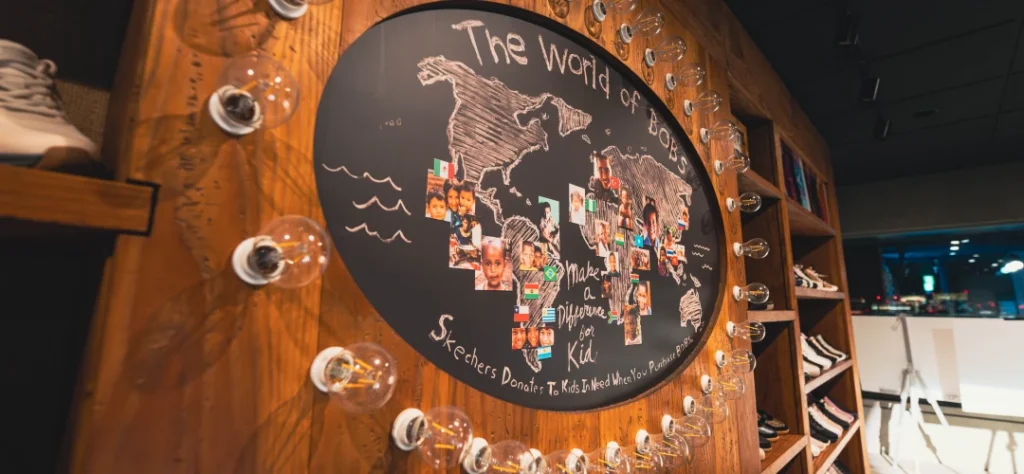
Walk into any large exhibit hall and look up. Floating above the sea of booths, the most prominent brands are not competing…
Read article →Tell us what you’re imagining. One business day, one real ballpark, not a runaround.
